
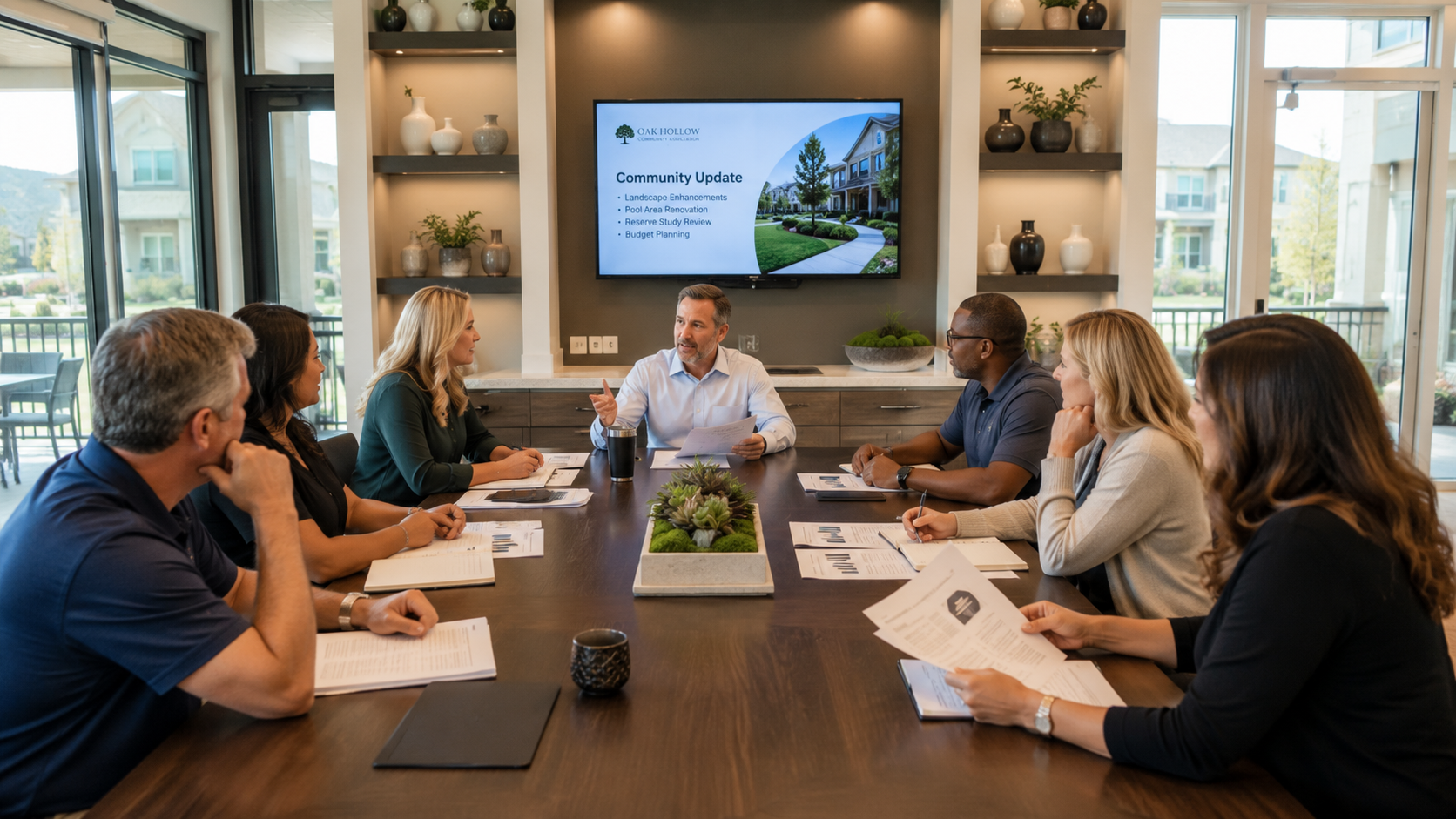
HOA board meetings play a critical role in the success of any community association. These meetings provide an opportunity for board members to discuss important issues, review finances, plan projects, and make decisions that impact homeowners and the future of the community.
When board meetings are organized and productive, they help improve communication, strengthen leadership, and build trust among residents. However, ineffective meetings can lead to confusion, delays, and frustration. Understanding how to properly conduct HOA board meetings can help boards operate more efficiently and serve their communities more effectively.
Why HOA Board Meetings Matter
Board meetings are where many of the most important decisions affecting a community are discussed and approved. From budgeting and vendor contracts to maintenance projects and policy updates, board meetings provide the framework for responsible community governance.
Well-run meetings help:
- Promote transparency
- Improve decision-making
- Encourage accountability
- Support long-term planning
- Increase homeowner confidence
Consistent, organized meetings allow board members to stay informed and ensure the association continues moving forward.
Start with a Clear Agenda
One of the most important steps in running an effective board meeting is creating an agenda before the meeting begins. A structured agenda helps keep discussions focused and ensures important topics are addressed.
Typical agenda items include:
- Call to Order
- Approval of Previous Meeting Minutes
- Financial Review
- Committee Reports
- Old Business
- New Business
- Homeowner Forum
- Adjournment
Distributing the agenda in advance allows board members to prepare and helps meetings run more efficiently.
Review Financial Information Regularly
Financial oversight is one of the board’s primary responsibilities. Every board meeting should include a review of the association’s financial position.
Board members should routinely review:
- Operating budgets
- Reserve fund balances
- Income and expenses
- Delinquent accounts
- Vendor payments
- Upcoming capital projects
Regular financial review helps boards make informed decisions and plan responsibly for future community needs.
Encourage Professional Discussion
Board members may not always agree on every issue, but productive discussions are essential for effective governance. Meetings should remain professional, respectful, and focused on finding solutions.
Successful boards often:
- Listen respectfully to differing viewpoints
- Stay focused on facts and community needs
- Avoid personal disagreements
- Remain solution-oriented
- Keep discussions on topic
Maintaining professionalism helps create a collaborative environment where better decisions can be made.
Document Meeting Minutes Accurately
Meeting minutes serve as the official record of board actions and decisions. Accurate documentation helps maintain transparency and provides important historical records for future boards.
Meeting minutes should typically include:
- Date and time of the meeting
- Board members in attendance
- Motions presented
- Voting results
- Decisions made
- Assigned action items
Well-maintained records support continuity and accountability within the association.
Allow Opportunities for Homeowner Participation
Many associations provide homeowners with an opportunity to ask questions or share concerns during a designated homeowner forum.
Providing residents with a voice helps foster trust and encourages stronger community engagement. While homeowner input is valuable, boards should also ensure meetings remain productive and follow established procedures.
Stay Focused on Community Goals
Effective board meetings focus on issues that impact the association as a whole. Discussions should align with the community’s long-term goals, financial responsibilities, and governing documents.
By focusing on strategic priorities rather than short-term distractions, boards can make decisions that benefit residents and protect property values over time.
Follow Up After the Meeting
Board meetings should lead to action. Once decisions have been made, it is important to track responsibilities and follow through on commitments.
After each meeting, boards should identify:
- Who is responsible for each task
- Project timelines and deadlines
- Vendor follow-up requirements
- Homeowner communications that need to be sent
- Items that require future discussion
Following up on action items helps ensure decisions result in meaningful progress for the community.
How Professional Community Management Can Help
Professional management companies play an important role in supporting HOA boards. Community managers can assist with agenda preparation, financial reporting, vendor coordination, compliance tracking, meeting logistics, and record keeping.
With experienced administrative support, board members can focus more on leadership, planning, and serving the best interests of the community.
Building Better HOA Board Meetings
Successful HOA board meetings require preparation, organization, communication, and accountability. By following proven meeting practices, boards can improve decision-making, strengthen homeowner confidence, and help position their communities for long-term success.
At Omega Association Management, we work closely with board members to provide the professional support, resources, and guidance needed to help communities thrive.
Looking for Professional HOA Management Support?
Contact Omega Association Management to learn how our experienced team can help your board operate more efficiently, communicate more effectively, and achieve its long-term goals.